Metabolic Layer
Regulation solves most things. Sleep improves. Anxiety drops. Relationships get clearer. The fog lifts.
But one thing regulation does not solve: the need for dopamine.
Cannabis numbs and softens. Alcohol stimulates and releases. Both deliver neurochemical reward on demand, without requiring social risk, physical effort, or skill acquisition. When they’re removed, the nervous system is calmer — and also hungrier. The easy dopamine is gone. The question becomes: what fills that space?
This is not a small question. For many people, it is the question — the one that determines whether regulation holds or collapses back into old patterns.
The answer is always some version of: other people, around things that matter.
Why Social Engagement Is the Target
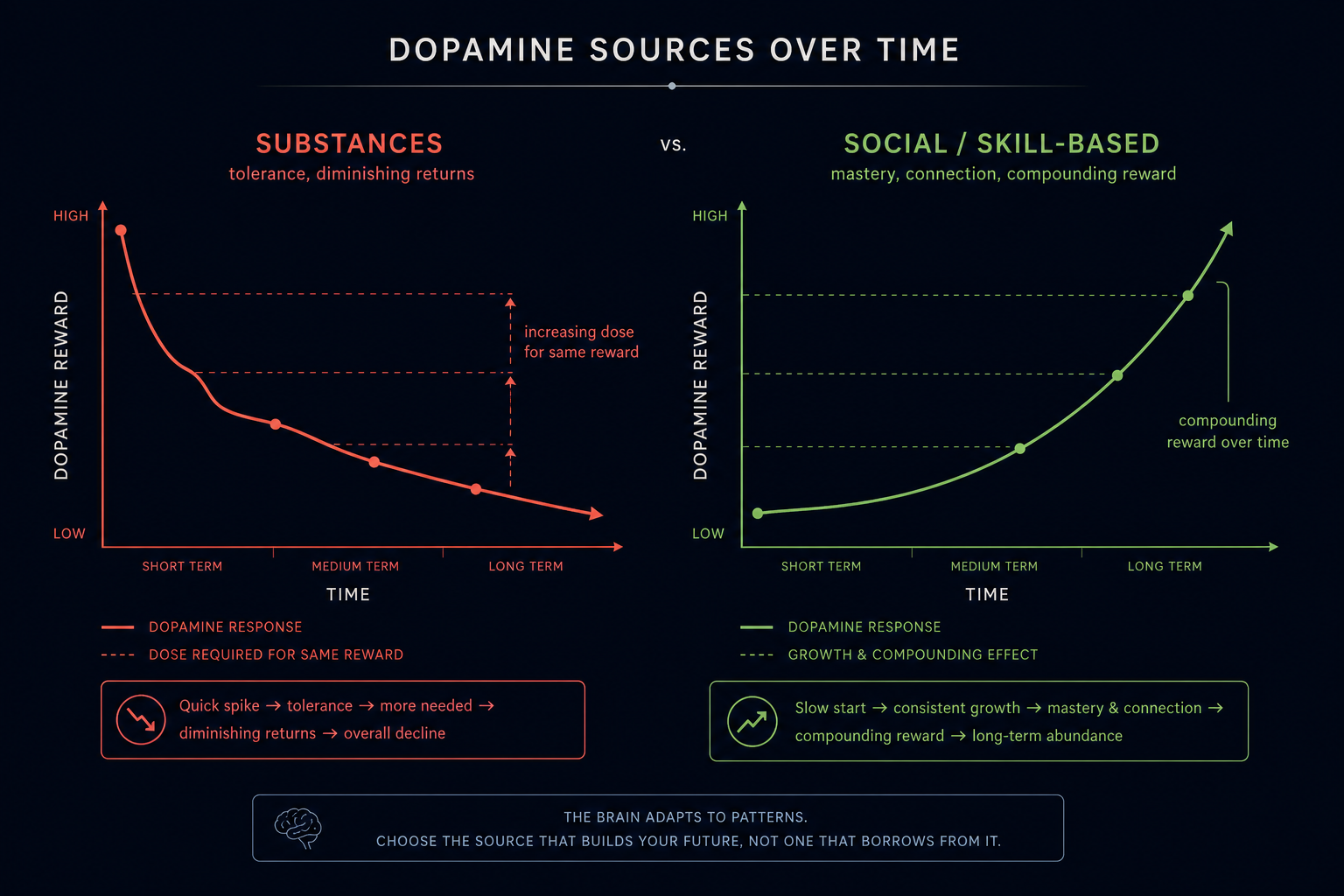
Dopamine is often described as the “reward chemical,” but that’s too simple. It is more accurately the anticipation and pursuit chemical — the signal that says this thing is worth moving toward. It fires in prediction, in seeking, in the moment before reward as much as during it.
The healthiest long-term dopamine sources share a structure:
- Unpredictable but not chaotic — enough variability to keep the system engaged, enough pattern to build skill
- Social — other nervous systems are the most complex and variable stimulus any human nervous system encounters
- Skill-indexed — the reward scales with competence, which means it compounds over time
- Embodied — physical activities involve the whole nervous system, not just cognition
Hobbies, work, sport, music, movement, shared projects — these all fit this structure. They produce dopamine through pursuit, mastery, and social contact simultaneously. None of them produce the immediate, reliable, on-demand dopamine of substances. But their rewards compound. Substances don’t.
Solving the Loneliness Problem
Anxious and avoidant attachment patterns both produce isolation — just through different mechanisms.
Anxious attachment creates cycles of intense connection and rupture, where each rupture feels catastrophic and drives the person to either over-pursue (separation panic) or collapse (freeze). Over time, the unpredictability of close relationships feels so costly that many people narrow their social world down to one or two intense relationships that carry all the weight. When those rupture, everything ruptures.
Avoidant attachment creates a more deliberate isolation — closeness triggers engulfment panic, so distance becomes the default. Social contact is managed carefully, kept shallow, and relationships that threaten to deepen are quietly discontinued. The nervous system is calm but disconnected, and the dopamine situation is grim.
Both patterns leave people in a version of loneliness. Both are solved the same way: low-stakes, repeated, interest-aligned social engagement — not because it bypasses attachment alarms, but because it builds new associations with social contact at a level of intensity the nervous system can tolerate.
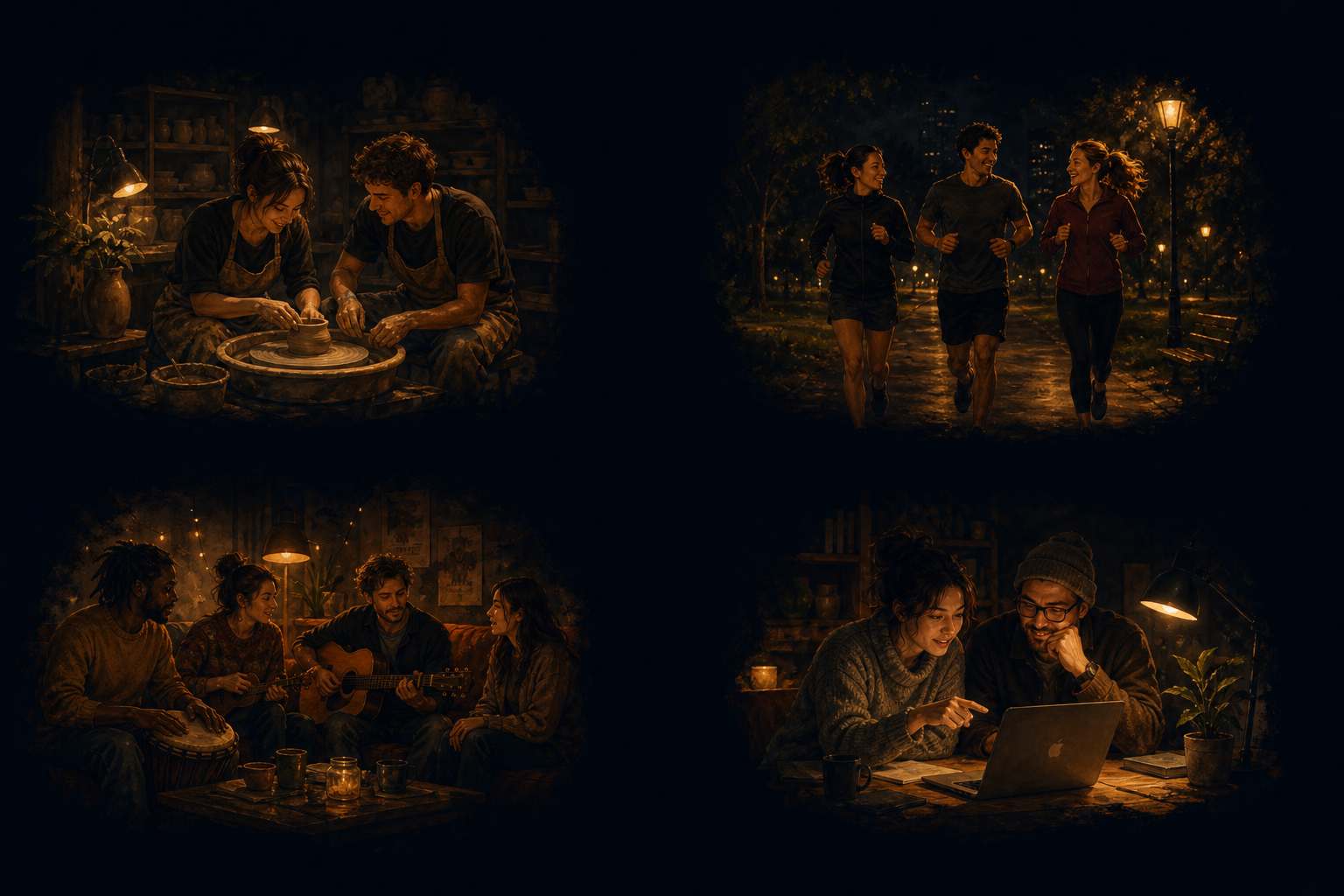
A ceramics class. A running club. A band. A volleyball league. A weekly game night. An open source project.
The format matters less than the combination: shared activity, low relational stakes, regular repetition, and a context that is about something other than the relationship itself.
When the relationship is structured around a shared object (the pottery, the code, the game), the social engagement system activates without immediately triggering attachment alarms. The dopamine comes first. The connection follows.
From Anxious/Avoidant to Secure: The Role of Dopamine
Secure attachment is not the absence of attachment alarms. It is a nervous system that has built enough positive association with social contact — enough dopamine reward from connection — that the cost-benefit calculation of closeness has shifted.
The anxious person’s nervous system learned: connection is the only source of safety, and its loss is catastrophic. Every social interaction carries that weight.
The avoidant person’s nervous system learned: connection is a threat to autonomy, and distance is the only source of safety.
Both learned this because in their formative environments, the social environment was either unreliable (anxious) or intrusive (avoidant) — and the nervous system optimized accordingly.
What heals this is not insight. It is new experience — repeated, embodied, social experiences where connection happens safely, where it doesn’t require vigilance or suppression, where it produces genuine dopamine reward without the terror or the cost.
Low-stakes interest-aligned social engagement is the training ground. It’s not therapy. It’s just a ceramics class, repeated enough times that the nervous system starts to update its model.
Movement as Social Dopamine
This is why integrated movement practices — particularly those done in groups — are especially powerful. Dance, martial arts, yoga, group fitness, team sport: all of these combine:
- Full-body neuroplasticity activation (see Movement & Neuroplasticity)
- Dopaminergic reward from skill acquisition
- Social engagement at low relational stakes
- Oxytocin release from coordinated movement with others (synchrony produces bonding)
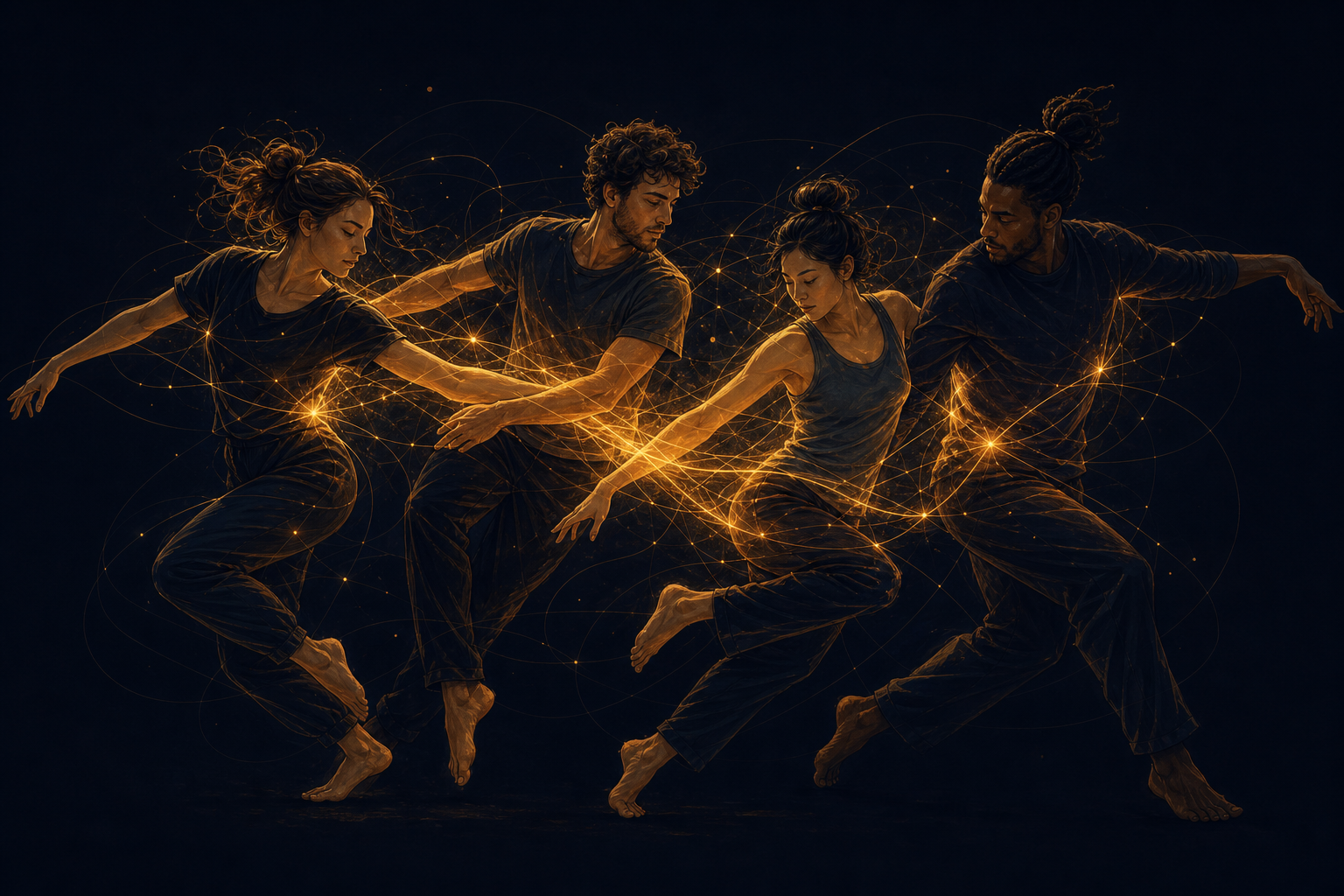
Synchronized movement with other people is one of the oldest and most reliable bonding mechanisms in human history. It is non-verbal, embodied, and activates the social engagement system (ventral vagal) without requiring the verbal-emotional vulnerability that triggers attachment alarms most acutely.
If someone is rebuilding their social dopamine from scratch, starting with a movement-based group activity is often the highest-leverage choice. The body does the bonding work before the mind gets a chance to run its protection strategies.
The Arc
The full arc this app is trying to support:
- Metabolic stability — the body has what it needs
- Nervous system capacity — regulation is possible; cycles complete; sleep works
- Habit formation — the hard patterns can be challenged sustainably
- Social re-engagement — low-stakes, interest-aligned, movement-assisted
- Dopamine transfer — from substances or compulsive patterns to skill, social, and embodied reward
- Interoception growth — reading your own states more accurately
- Perception of others — reading other people’s nervous systems without taking their states personally
Each stage builds the foundation for the next. None of them require perfection at the previous stage. They all happen in parallel, slowly, through repetition.
The brain changes. It just requires evidence.