Metabolic Layer
“Most therapy apps, when they don’t address metabolic regulation while asking you to do difficult emotional work, are doing something like asking someone to get dentistry done without anesthesia.”
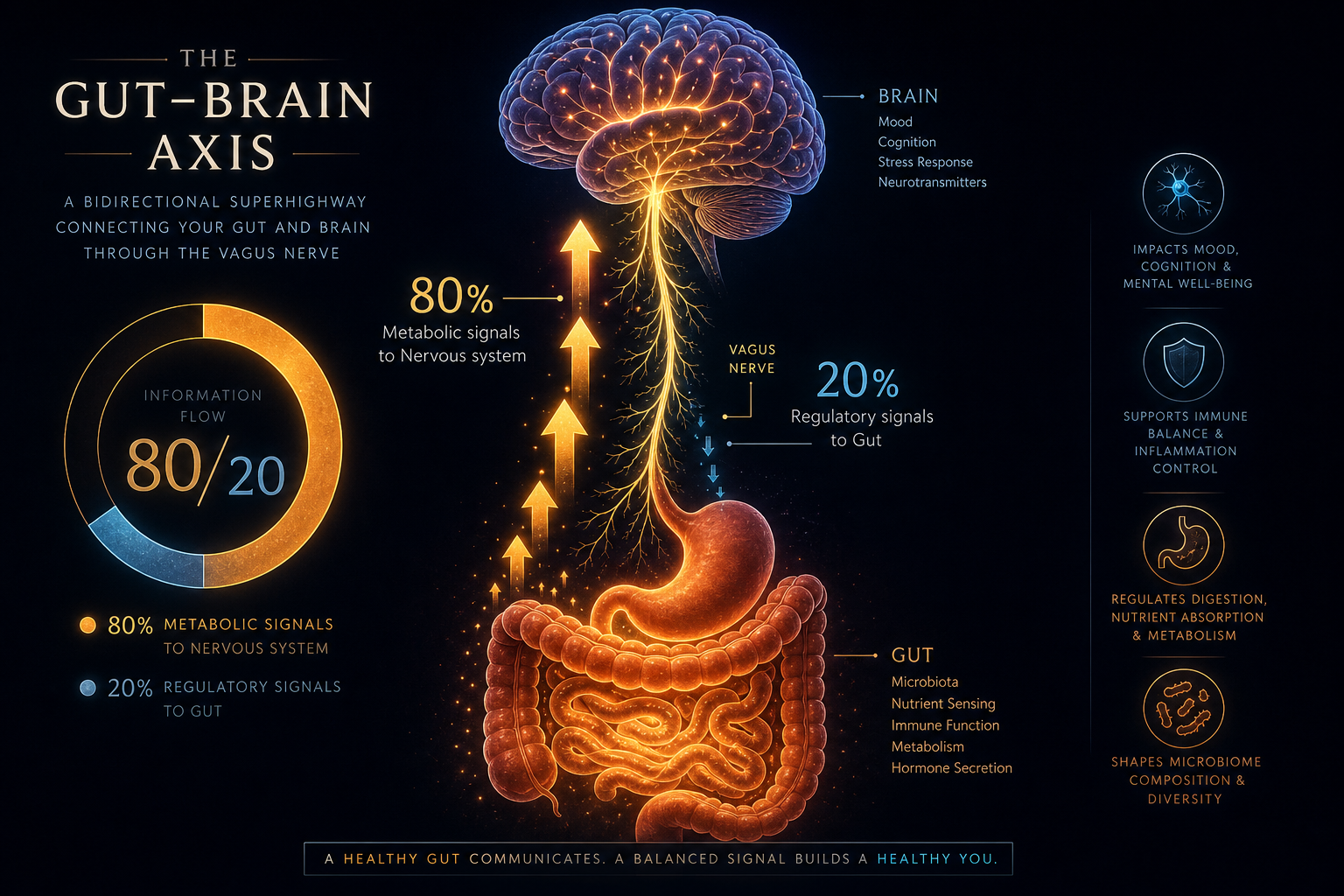
This is the premise behind Downshiftr’s metabolic layer — and it’s not metaphor. The nervous system runs on glucose. Downregulation requires metabolic resources. A depleted system cannot do this work. It can only defend against it.
What you eat, when you sleep, and what substances you use are not a lifestyle sidebar. They are the foundation of your emotional capacity.
Salt and Fat First
When the nervous system is dysregulated — whether from substances, stress, or coming off substances — the first metabolic intervention is not motivation. It’s food. Specifically salt and fat.
Salt supports adrenal function and electrolyte balance. Low salt increases cortisol, produces edginess and irritability that presents as emotional instability. The body signals salt need as vague discomfort, craving, or restlessness that looks emotional.
Fat provides sustained fuel for nervous system function — myelin production, hormone synthesis, the slow-burn baseline that keeps the system running without spikes. Fat plus salt is the most direct metabolic stabilizer for a dysregulated state.
Carbohydrates provide fast glucose on top of that foundation. The sequence matters: fat/salt baseline, then carbs as a boost.
The Underestimation Problem
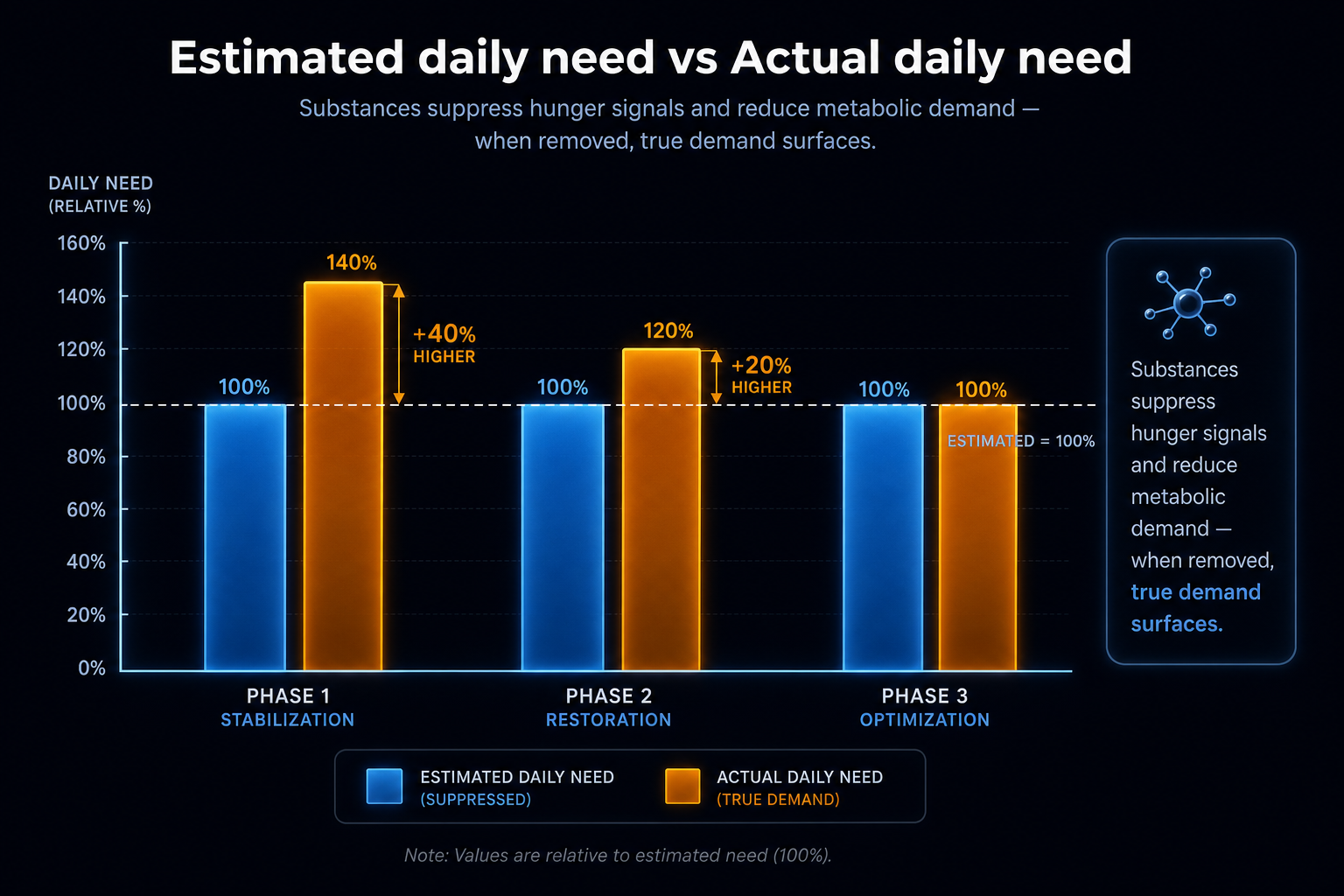
People coming off substances — or in chronic stress — almost universally underestimate how much they need to eat. The system has been relying on chemical modulation (cannabis, alcohol, stimulants) to manage its metabolic and regulatory needs. When that modulation is removed, the actual nutritional demand surfaces — and it’s consistently 30–50% higher than expected.
The emotional experience of this gap feels psychological. It presents as dysregulation, irritability, anxiety, inability to cope. The body is trying to tell you it needs fuel. The mind interprets it as emotional crisis.
Downshiftr’s AI asks about food before anything else when you’re dysregulated. Not as a dismissal of the emotional content — as a first-order physical question. Because if the tank is empty, no amount of regulation technique will hold.
The Metabolic Progression
Where you are determines what you need. Downshiftr tracks three phases:
Phase 1 — Stabilization
Coming off substances, or in acute dysregulation.
The body has been running on borrowed fuel. The priority is: replace substance regulation with food. Dramatically increase caloric intake. Salt and fat first.
The AI in this phase asks about food before anything else. It names the underestimation phenomenon. It does not push exercise or sleep optimization yet — the platform isn’t stable enough.
Phase 2 — Restoration
Several weeks in. Emotional intensity reducing. Body composition shifting.
The body exits starvation mode. Glycogen stores refill. Hunger signals normalize. The shift is toward protein. Stimulants become questionable — large caffeine doses produce a sharp arousal spike followed by a crash that’s destabilizing when the nervous system is still sensitive.
This is also the phase where suppressed nervous system cycles start completing. The first time this happens can feel alarming — unexpected grief, late-night emotional releases, waves of feeling with no clear cause. This is biology finishing what it started. The AI guides you through it.
Phase 3 — Optimization
Stable baseline. Regulation capacity is noticeably higher.
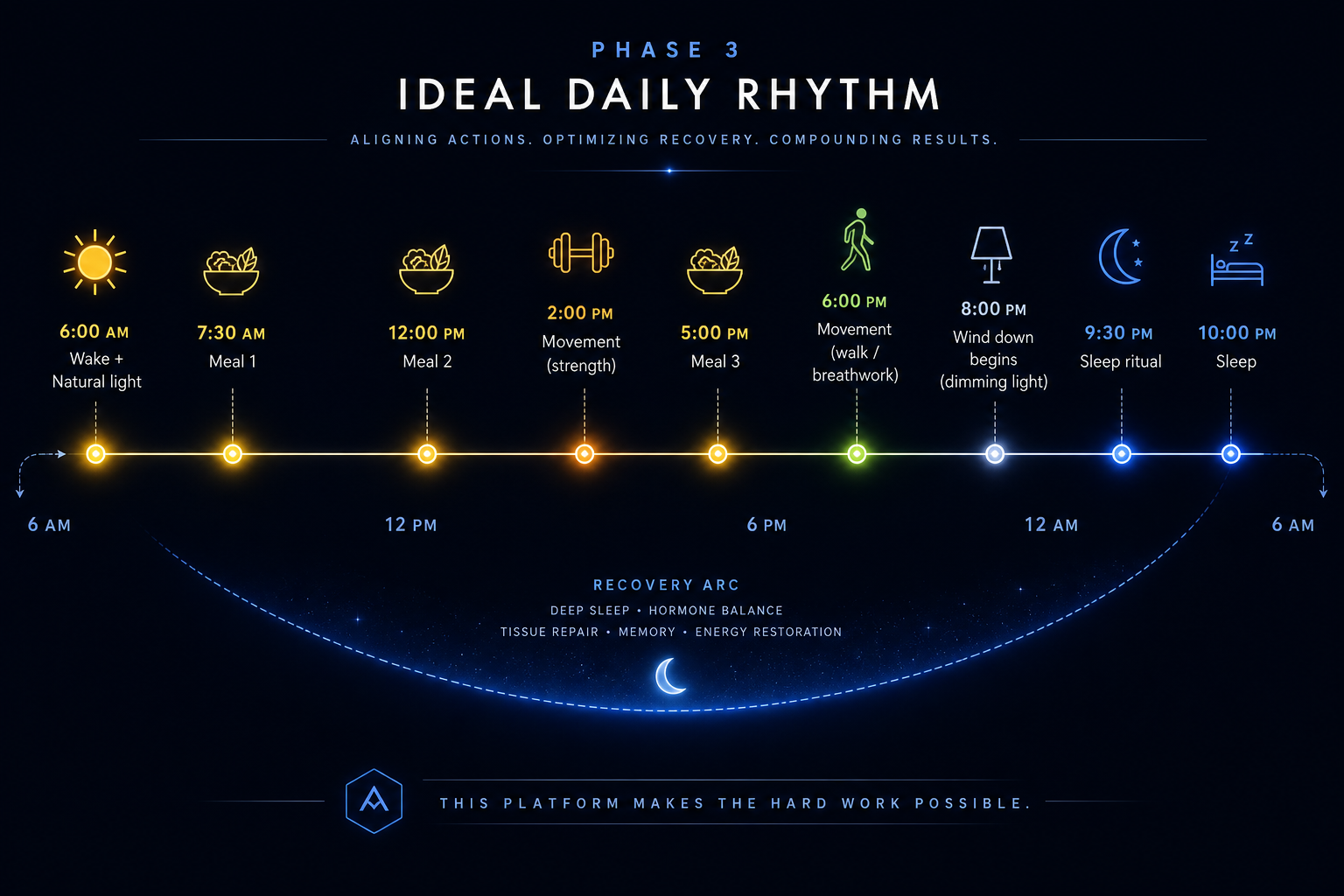
The platform from which difficult habit work becomes sustainable:
- Early wake time with immediate natural light (sets circadian rhythm via melanopsin)
- Three real meals with balanced macros
- Movement twice daily — one strength session, one lower-intensity (walk, stretch, breathwork). Varying modalities complete different nervous system cycles.
- No large caffeine after noon (protects sleep architecture)
- Sleep ritual — a consistent 60–90 minute downshift sequence before sleep
Substances
Downshiftr tracks substance use without judgment. It’s metabolic data. The twin shows it as a translucent interference layer.
Cannabis: Suppresses nervous system cycles, blunts ventral vagal access over time with chronic use, disrupts sleep architecture. When cannabis is removed, the backlog of suppressed cycles surfaces.
Alcohol: Acts as a GABA agonist (mimics parasympathetic rest in the short term), followed by rebound sympathetic activation. Disrupts cycle completion and sleep architecture.
Caffeine: Works, but large doses deliver arousal in a bolus — a sharp sympathetic spike followed by a cortisol-mediated crash. In Phase 1–2, this is destabilizing. In Phase 3, it’s manageable. The question is always: are you using caffeine for fuel, or for regulation?
The app doesn’t ask you to stop anything. It shows you the effect on your twin, and lets you draw your own conclusions.